
 9 hours ago
1
9 hours ago
1
When the elevator doors opened, the reporters waiting in the hallway immediately crowded around the gaunt, orange-clad man who emerged, escorted by his public defender and a sheriff’s deputy. The three men made their way toward the seventh-floor courtroom of Oklahoma County District Court Judge Natalie Mai, as reporters shouted questions.
“Why did you kill Barry Van Treese?” one asked.
Justin Sneed, 49, didn’t answer, his handcuffs and waist chain clanging as he walked. With a short, graying goatee and long brown hair pulled back into a ponytail, Sneed maintained a hollow stare. Inside the courtroom, his lawyer directed him to a chair just in front of the jury box. Sneed sat, his hands clasped in front of him, and kept his gaze toward the floor. Directly across the room was Richard Glossip, the man nearly executed for killing their boss — a grisly murder that Sneed actually committed.
Sneed was 19 years old when he beat Van Treese to death at the Best Budget Inn, a rundown motel Van Treese owned on the outskirts of Oklahoma City. Sneed admitted to the January 1997 murder but swore Glossip put him up to it. Glossip insisted he was innocent and, apart from Sneed’s account, there was scant evidence connecting him to the crime. Still, in exchange for a life sentence, Sneed became the state’s star witness against Glossip, clinching his conviction and sending him to death row.
It would not take long for Sneed’s story to start falling apart. Glossip’s original conviction was overturned after a state court found that Glossip’s trial lawyers failed to present critical exculpatory evidence — a video of Sneed’s police interrogation that showed Oklahoma City detectives pressuring him into implicating Glossip. Nevertheless, in 2004, a second jury reconvicted Glossip and again sentenced him to death.
In 2025, the U.S. Supreme Court vacated Glossip’s conviction, concluding that it was rooted in false testimony and prosecutorial misconduct. The justices found that Sneed lied on the stand, dismantling the basis for the state’s case. “Besides Sneed, no other witness and no physical evidence established that Glossip orchestrated Van Treese’s murder,” Justice Sonia Sotomayor wrote for the majority. “Thus, the jury could convict Glossip only if it believed Sneed.”
Many expected Glossip’s saga to end there. Instead, Oklahoma announced it would retry Glossip for first-degree murder, once again relying on Sneed. “The evidence presented will be essentially the same as was presented in the first two trials,” prosecutor Jimmy Harmon told Mai earlier this year.
Glossip’s attorneys have strenuously objected to the state’s plan to use the same discredited evidence for a third time. They are also adamant that they should have a chance to put Sneed on the witness stand, so that Mai can assess his credibility before trial. It is this insistence that led Glossip and Sneed to sit face to face in court for the first time in decades.
Glossip, now 63, was released on bond in May. He sat at the defense table in a navy suit and crisp white shirt while the daylong hearing got underway. Mai had convened the September 30 proceeding to consider a flurry of defense motions, many of which centered on Sneed’s role in the case. Sneed had been subpoenaed in advance of the hearing, which attracted a gaggle of reporters to Mai’s courtroom. But it was unclear whether he would take the stand.
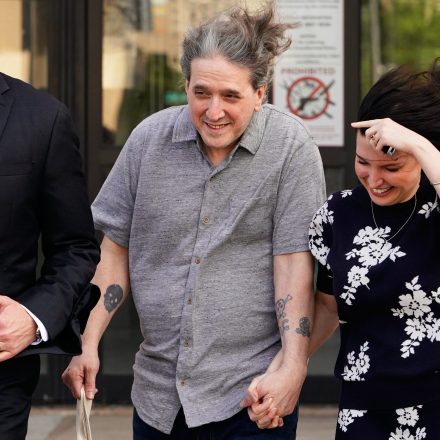
Much of the time was spent listening to lawyers on both sides argue over ongoing conflicts in the case. Glossip’s legal team has repeatedly clashed with prosecutors over the state’s obligation to disclose evidence before trial. The constant disagreements have threatened to derail Mai’s tight trial schedule; after initially setting Glossip’s trial for September, she has since pushed the trial date to December 7.
But that too seems vanishingly unlikely. As the hearing dragged on, the bigger question was whether a trial will happen at all.
It was exactly 11 years earlier, on September 30, 2015, that Glossip came perilously close to being put to death at the Oklahoma State Penitentiary, only for officials to realize at the eleventh hour that they had procured the wrong combination of drugs to carry out his lethal injection. In the decade that followed, Glossip’s defense attorney, Don Knight, reinvestigated the case and uncovered a trove of evidence previously withheld by the state. He also secured a host of new witnesses who came forward to say that, despite the state’s portrayal of Sneed as a hapless dolt who was entirely under Glossip’s control, Sneed was actually cunning, volatile, and entirely capable of murder on his own.

The revelations eventually prompted a bipartisan group of Oklahoma lawmakers to question Glossip’s conviction and seek an independent investigation into the case. In June 2022, the law firm Reed Smith LLP published the first in a series of exhaustive reports, unearthing even more evidence undermining prosecutors’ theory of the crime and revealing that the state had willfully destroyed key pieces of evidence before Glossip’s 2004 retrial. The following year, newly elected state Attorney General Gentner Drummond announced his own probe into the case. That investigation found myriad problems with Glossip’s prosecution, persuading Drummond that Glossip’s conviction and death sentence should not stand.
Drummond asked the Oklahoma Court of Criminal Appeals to vacate Glossip’s conviction but it refused, once again setting Glossip up for execution. The attorney general took unprecedented steps to spare Glossip’s life, ultimately joining Glossip’s efforts to get the case before the Supreme Court — and taking a victory lap after the justices finally ruled in Glossip’s favor in February 2025.
But just a few months after the high court ruling, Drummond did an abrupt about-face, announcing that he would retry Glossip for first-degree murder. The reversal coincided with Drummond’s campaign for governor, which ended in a primary defeat this past August. In the meantime, defense attorneys repeatedly reiterated Drummond’s own critiques of the case, emphasizing that, until recently, he vehemently criticized the same evidence his prosecutors plan to reuse.
Among these criticisms were key concessions Drummond made regarding misconduct by Connie Smothermon, the lead prosecutor at Glossip’s 2004 retrial. At the heart of the Supreme Court ruling was that Smothermon not only failed to disclose key notes about Sneed’s psychiatric history, but also failed to correct portions of Sneed’s testimony that she knew were false.
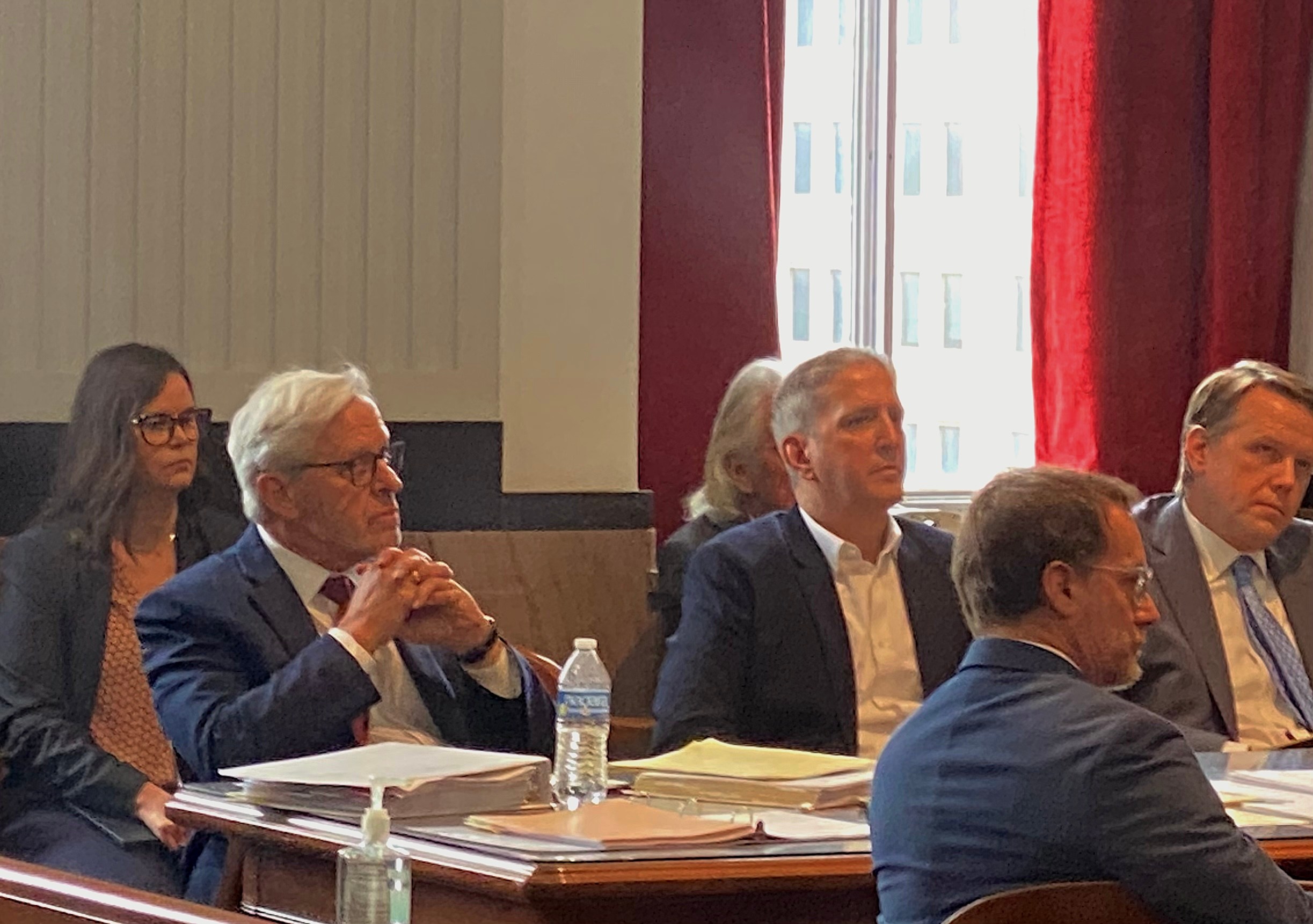 Richard Glossip, center, alongside defense attorney Don Knight and other members of his legal team, as seen from outside Oklahoma County District Judge Natalie Mai’s courtroom on Sept. 30, 2026. Photo: Liliana Segura/The Intercept
Drummond also conceded that Smothermon improperly sought to alter Sneed’s testimony before he took the stand at the retrial to make it fit the forensic evidence. At Glossip’s first trial, Sneed denied attacking Van Treese with a knife even though a knife was found at the scene — and despite the medical examiner’s findings that there were puncture wounds on Van Treese’s chest. Midway through Glossip’s second trial, Smothermon wrote a note to Sneed’s defense attorney, indicating that there were inconsistencies Sneed needed to clear up.
“Our biggest problem,” Smothermon wrote, “is still the knife.” When Sneed later took the stand, he testified that he did, in fact, stab Van Treese.
Glossip’s attorneys did not discover this note until 2022. In its ruling, the Supreme Court agreed with Drummond that Smothermon violated Glossip’s rights by trying to modify Sneed’s testimony mid-trial. Yet Drummond’s own prosecutors now argue that there’s no evidence that Smothermon’s mid-trial intervention “improperly influenced” Sneed’s testimony.
In early September, Glossip’s attorneys filed a motion urging Mai to put Sneed on the stand to clear this up. “No court has yet held an evidentiary hearing to determine the full scope of the … violation,” they wrote, “its effect on Sneed’s testimony, and what procedures may be necessary to prevent the jury from being deceived about what Sneed remembers versus what he was coached to say.”

In a surprisingly candid reply, Joshua Lockett, deputy chief of the Oklahoma attorney general’s criminal appeals unit, wrote that it is unreasonable to expect Sneed to be able to answer questions about the knife and his shifting trial testimony after all these years. “Any evidentiary hearing would be unable to disentangle the source of Sneed’s knowledge” — whether it came from Sneed’s memory about the night of the crime, or from what he “absorbed” from Smothermon’s mid-trial note, he wrote. “That sorting would have been difficult in 2004,” he wrote. “It is impossible in 2026.”
In other words, the state appeared to be conceding that its star witness cannot now reliably recount what happened the night he murdered Barry Van Treese.
Hanging over Wednesday’s proceeding was an uncomfortable reality that has dogged the state’s case for years: evidence that Sneed has repeatedly tried to take back his claim that Glossip coerced him into murdering Van Treese.
In October 2014, nearly a year before Glossip’s near-execution, Sneed’s adult daughter O’Ryan Justine Sneed sent a letter to the Oklahoma Board of Pardon and Parole, urging them to grant clemency to Glossip. “For a couple of years now, my father has been talking to me about recanting his original testimony,” she wrote. “I feel his conscious [sic] is getting to him.”
“Do I have the choice of re-canting my testimony at any time during my life, or anything like that.”
Among the most compelling pieces of evidence to emerge since then are two handwritten notes, penned years apart, in which Sneed indicated he wanted to retract his testimony. In 2003, a year before Glossip’s second trial, Sneed wrote to his public defender, Gina Walker, asking, “Do I have the choice of re-canting my testimony at any time during my life, or anything like that.” In 2007, he sent Walker another letter: “There are a lot of things right now that are eating at me,” he wrote. Things he needed “to clean up.” Walker, who has since died, discouraged him from coming forward.
Both of these notes came from Sneed’s public defender file. Ordinarily such communications would be shielded from release by attorney-client privilege, but in this case the public defender’s office provided the documents to investigators with Reed Smith. Glossip’s attorneys argued that there is reason to believe that there may be additional material in Sneed’s file that could cast further doubt on his story.

But whether the lawyers might be entitled to any of these records depends on a key question: Did Sneed consent to the disclosure of the records in the first place?
Over the state’s objections, Mai said she would allow Sneed to take the stand for the “limited purpose — and I do mean limited purpose” of asking Sneed whether he ever consented to his records being released. “I will allow for very limited questioning of Mr. Sneed as to that topic,” she said.
Sneed shuffled to a wooden chair next to the judge’s bench and sat awkwardly, his legs spread wide and his gaze still fixed on the ground.
In response to questions from one of Glossip’s defense attorneys, Sneed said he never consented to the release of materials from his public defender file. But he also said that he met with investigators with Reed Smith while accompanied by the head of the public defender office. Perhaps more perplexing, Sneed said he knew by then that his files had been released to investigators because he’d seen it broadcast “on the media, when it was on the television with the news reporters.” When the investigators tried to interview him, “I just didn’t answer their questions, didn’t try to go into details about anything,” Sneed said, “because I was actively upset about the fact that [the files] were released anyway without my consent.”
The testimony was confusing and brief, an unsatisfying turn on the stand that did nothing to answer any of the long-standing questions about the state’s star witness or how he would testify about the murder this time around.
As they have for months, lawyers with the attorney general’s office spent much of the day pushing back hard on the notion that Sneed should take the stand before trial to discuss the knife, his public defender file, or anything else. In court, Knight pointed out that prosecutors have met with Sneed repeatedly over the last year and a half, and yet have only turned over to the defense brief summaries of those conversations. Taken together, the state’s maneuvering suggests prosecutors are far less confident in their case against Glossip than they have previously claimed.
“For 29 years, this case had been marked by prosecutorial errors and misconduct.”
In a statement to The Intercept, Knight said he was struck by prosecutors’ efforts to keep Sneed from testifying. “For 29 years, this case had been marked by prosecutorial errors and misconduct,” he said. “And now they can’t even trust the testimony of the only witness that says Rich was involved in this murder. But they can’t hide him forever. We look forward to spending a couple of days with Mr. Sneed on the stand at trial.”
As Sneed was led out of the courtroom, reporters surrounded him again as he made his way to the elevators. “All these years later do you have any regrets?” one asked just before the doors closed. Sneed did not answer.
The post The Key Witness Against Richard Glossip Just Returned to Court. It Didn’t Go Well. appeared first on The Intercept.
 English (US) ·