
 5 months ago
72
5 months ago
72
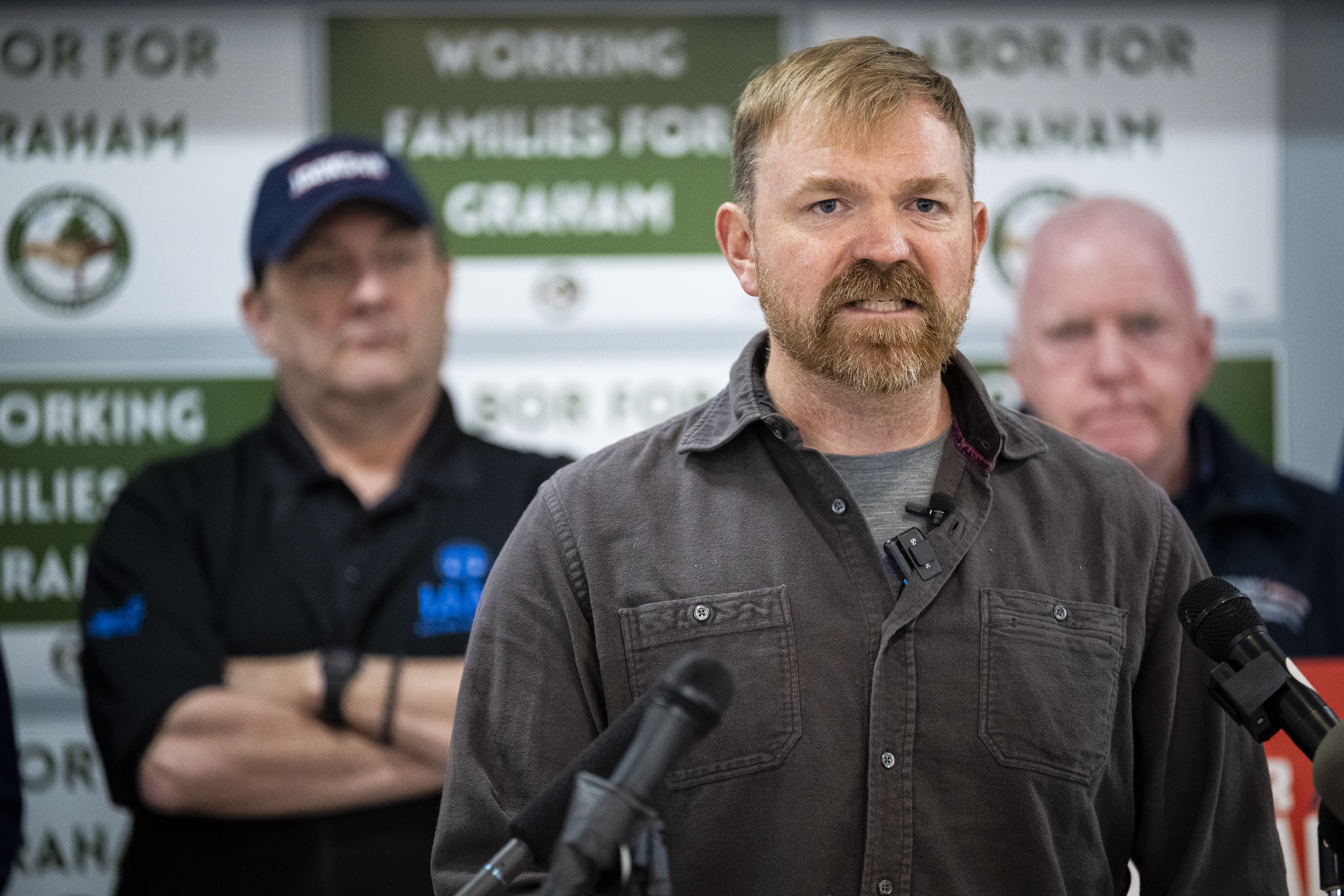 U.S. Senate candidate Graham Platner speaks during a campaign event with the Maine AFL-CIO, on May 1, 2026, in Portland, Maine. Photo: Graeme Sloan/Getty Images
The Democratic Party’s centrist wing is doing a 180 on Maine senatorial hopeful Graham Platner after Gov. Janet Mills dropped out of the race — a major setback for their side in an ongoing intraparty war for the future of the party.
The June primary was shaping up to be another proxy fight for the ongoing power struggle between the party’s progressive and centrist wings. Sen. Bernie Sanders, along with Elizabeth Warren, Ruben Gallego, and Martin Heinrich, backed Platner early on; Senate Minority Leader Chuck Schumer and the Democratic Senatorial Campaign Committee, as well as EMILY’s List, threw their support behind Mills.
But the Democratic voters of Maine didn’t appear interested in a protracted back and forth, nor were they impressed by the party establishment’s perceived shoehorning-in of Mills as an alternative to an upstart, energetic, young candidate they already liked. Some more mainstream Democrats already get that, like Minnesota Gov. Tim Walz, who previously lent his powerful email list to Mills during her campaign announcement; he will host a general election kickoff event with Platner on Friday. Schumer and DSCC Chair Kirsten Gillibrand, meanwhile, announced they “will work with the presumptive Democratic nominee, Graham Platner” to defeat Collins.

Others should get on board with the new reality. The primary map is only getting more challenging for centrist Democrats. In Michigan, their preferred candidate Rep. Haley Stevens is in a tight race with state Sen. Mallory McMorrow and public health official Abdul El-Sayed. Iowa state Rep. Josh Turek, Schumer’s pick, is neck and neck with state Sen. Zach Wahls; in Minnesota, Schumer’s favored candidate, Rep. Angie Craig, has a significant cash advantage, but Lt. Gov. Peggy Flanagan regularly trounces her in early polling.
The writing was on the wall for Mills weeks ago. She was never able to catch up to Platner’s polling, and her campaign stopped ad spending after attacks on Platner over his past controversies failed to gain traction. It was clear the governor was throwing in the towel last week when she vetoed a data center moratorium bill backed by the Maine Democratic base but opposed by business interests in the state. That choice raised eyebrows; the governor’s suggestion in mid-April that she would have voted against a Senate bill restricting U.S. aid for 1,000 pound bombs and armored bulldozers only confirmed suspicions that Mills was out of touch with the party faithful.

Platner, who spent the late summer and early fall of 2025 criss-crossing Maine doing town halls and other events, has been drawing huge crowds since August. That outreach to voters, as New York magazine writer and Mainer Rebecca Traister noted on Thursday, probably saved him from the scandals around a Nazi-related tattoo he got during his time in the Marines and the drudging up of old, controversial Reddit posts.
Equally important was the feeling for many in Maine that D.C. Democrats were putting their thumb on the scale and trying to take the decision away from the people. It’s part of a national souring on the party’s centrist, corporate wing, which has dominated the internal levers of power for decades, that came in the wake of Trump’s election in 2024. The party base has become radicalized and is demanding fight and action.
Go to a No Kings protest, and you’ll see liberals holding signs calling for the imprisonment of Republicans like Donald Trump and implying that members of the administration should be dealt with more permanently. It’s become a bit of a meme to remark on the normie bloodlust that’s pervaded liberalism since November 2024, but only because it’s true.
It’s part of an overall souring on the party’s centrist, corporate wing, which has dominated the internal levers of power for decades.
Despite polling showing voters are eager to throw out the GOP and put in Democrats in the midterms, approval for the Democratic Party is at historic lows. Liberals aren’t going to settle for what’s become the rote Democratic response to Republican misbehavior: objecting on process grounds when out of power, half-assedly pushing ineffective institutional fixes once they reclaim Congress, and then brushing it all under the rug when they win the White House. This time they want accountability, none of the “looking forward, not backward” that Barack Obama placated the base with in early 2009.
Fuel for your fury isn’t hard to find. Sen. John Fetterman’s fervent support of Israel and willingness to buck his party in favor of the president has made him a villain to liberals and progressives alike, so much so that “another Fetterman” has been deployed as a slur by both sides in hotly contested primaries. Politicians whose popularity was once unimpeachable, like Obama, have been confronted over the Gaza genocide in public appearances. Members of Congress are regularly harangued at public events over the party’s weakness and apparent disinterest in meaningfully opposing Trump.
Platner’s got a good shot at winning. And for all the valid concern that Collins can once again pull off a victory, she appears to be taking this threat seriously, breaking with Trump over Iran war powers on Thursday. It’s a small act of resistance, and not one that should be expected to be of any actual consequence, as is the pattern for the senator. But the fact that she’s doing it now, after Mills dropped out, says that Platner — and the energized movement he represents — is a clear challenge to another six years for the Republican.
Platner isn’t perfect — no politician is. But as he shifts his campaign to the general election and against Collins, all but the most marginal and fringe diehards in the Democratic coalition are coalescing around him. At 41, he presents himself as a new, more energetic fighter of a Democrat, one who’s promised to confront both the GOP and the centrist corporate elements of his own party. Time will tell if he can deliver, and what compromises he’s willing to make.
The post Graham Platner Handed Centrist Dems a Bruising Defeat in Maine appeared first on The Intercept.
 English (US) ·